
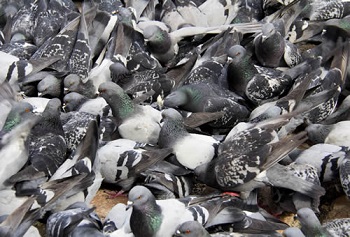
 Pigeon control can turn into more than just a hindrance and become very troublesome if not managed. If you’re reading this, you’ve probably encountered the problem.
Businesses with an unwanted bird population may struggle to operate smoothly. Apart from the noise-element, birds potentially bring health hazards with them: the larger the population, the larger the inherent risk. This handy five-point list should point you in the right direction if you’re faced a bird control dilemma. Pigeon and other bird control should always be approached in a humane fashion.
- Understanding the Issue
Pigeons in particular, do not migrate as in the case of most other birds – meaning they return to their homes unless prevented from doing so.
Preventing access to what pigeons usually refer to as their domain, is where the behaviour patterns can begin to be manipulated. We take this, along with other factors in bird behaviour into account when dealing with bird control.
- Be Humane
Although a hindrance, we do not condone the inhumane treatment of animals. There are more appropriate ways of dealing with the issue than causing unnecessary harm. Call up a reputable expert and have a conversation about how the problem may be approached.
Bird spikes are known to be very efficient. The Royal Society for the Protection of Birds (RSPB) highly recommends them for anyone attempting pigeon control in outdoor areas. These spikes are easy to install and are not too much of an eye-sore when neutral colours and strategic or stealthy positioning methods are used.
- Cover Openings and Exits to Buildings
The most logical step and although it isn’t fool-proof (pigeons are pretty resourceful as are most wild animals) it is a good start when combating a pigeon problem. Of course, it is impossible and not preferable to keep entrance points closed at all times if you enjoy a bit of natural light, but be vigilant and conscious of their habits and the timing of those habits.
- Make a Racket
Noise is a well-known deterrent for birds and especially pigeons. Noise boxes are one option, these contraptions scare off birds with shrill noises at regular intervals. Some companies get pretty creative here too, using replica calls of eagles and other birds of prey to strike fear into the heart of the lowly pigeon. Noise is a good form of pigeon control.
- Consult an Expert
Your best bet is to call in the experts and have them assess your premises. Pest control companies usually do free assessments and this gives you the chance to make an informed decision. If all else fails, specialists will be able to implement the best possible solution to your pigeon control woes.
Image Credit: Cromwell Demolition

0 Comments