
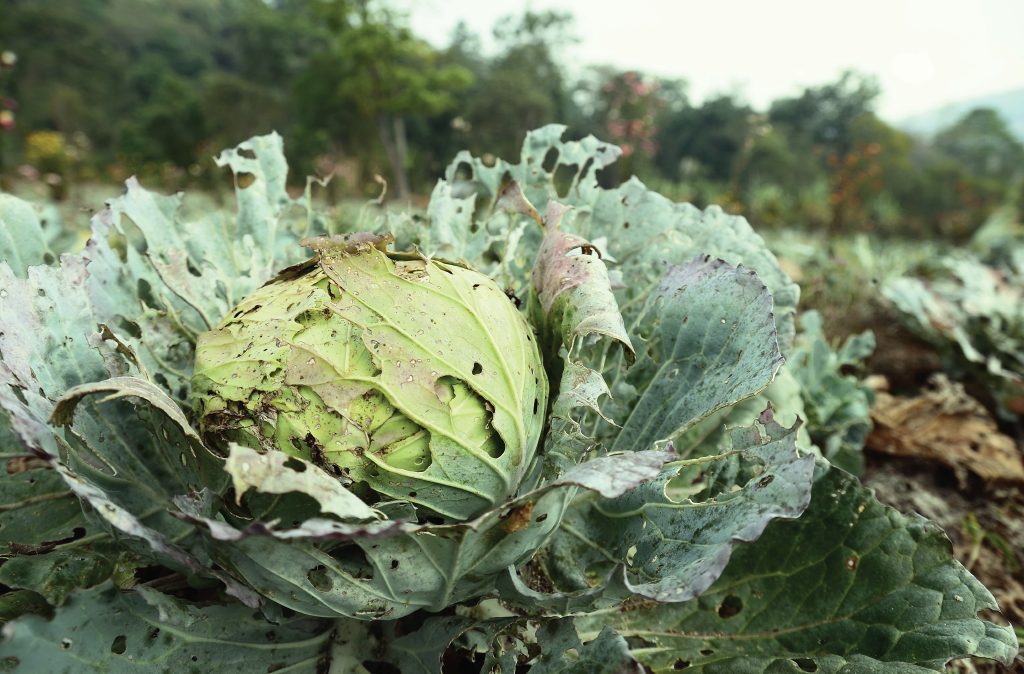
World Food Day (16 October) provides an occasion to highlight the plight of 870 million undernourished people in the world. There are many threats to global food supplies, including population growth, food prices, climate change, food waste and land pressures. But one of the biggest concerns is a biological threat that has plagued food security for centuries – plant pests and diseases.
Plant pests account for about a 40% loss in global production and scientists forecast the problem to get worse despite advances in modern agriculture and pest control.
Dr Matthew Cock, chief scientist for CABI, a UK-based agri-environment research organisation compiled a list of the eight worst plant pests threatening crops around the world.
- Worst historical pest – the desert locust (Schistocerca gregaria)
- Hardest pest to control – South American rubber blight (Microcyclus ulei)
- Most expensive pest to control – western corn root worm (Diabrotica virgifera virgifera)
- Pest of greatest human impact – potato blight (Phytophthora infestans)
- Worst stored product pest – the Khapra beetle (Trogoderma granarium)
- Worst climate change threat – mountain pine beetle (Dendroctonus ponderosae)
- Most imminent threat – wheat stem rust strain Ug99 (Puccinia graminis tritici)
- Most resilient threat – colorado potato beetle (Leptinotarsa decemlineata)
Source: BBC News
Awareness, education, and research and development strategies are more important than ever to make agriculture more efficient and sustainable, of which integrated pest and disease management is a critical component.
Pests in the Food Industry
Beyond agricultural practices, pest infestations also account for tonnes of food waste and spoilage in food businesses such as retailers, restaurants, manufacturers and distributors.
Watch the video below to learn more about Food Safety in the Food Industry from The Specialists Franchise Group MD, Francois Swart as he talks about how pests contaminate food and the roles and responsibilities of food businesses when it comes to pest management.
Partner with The Specialists to keep your business safe, healthy and compliant. Contact us today.

0 Comments